Every year, World Hepatitis Day reminds us that viral hepatitis remains one of the leading causes of preventable illness and death worldwide. It also reminds us that elimination is within reach, if we strengthen prevention, expand testing, improve access to treatment and work together across sectors and communities.
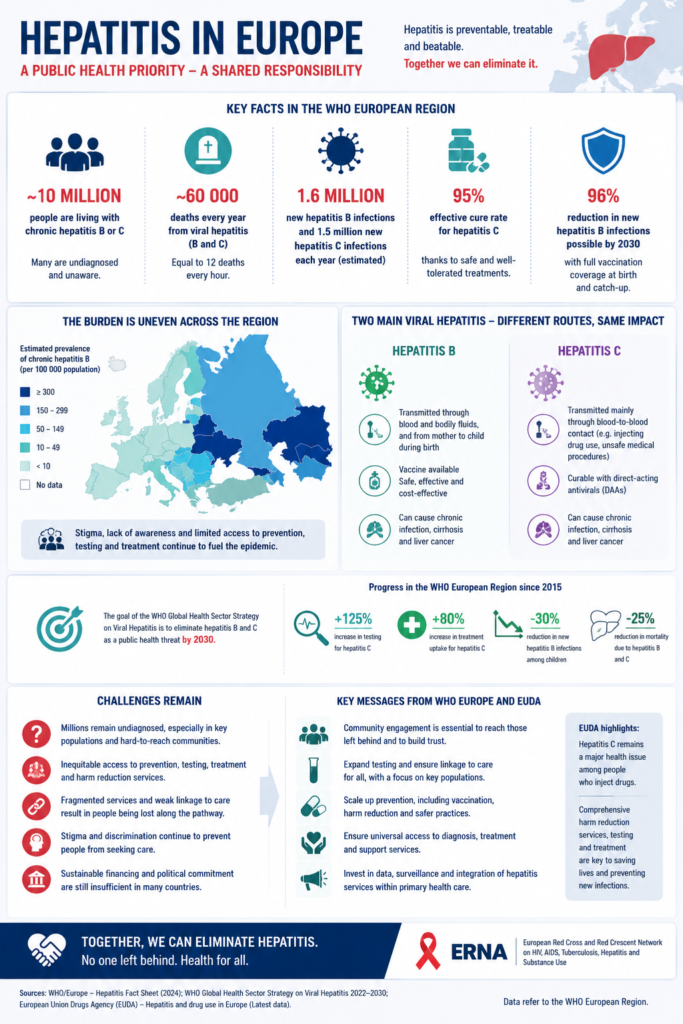
Across the WHO European Region, around 10 million people are living with chronic hepatitis B or C, many without knowing it. Despite the availability of highly effective treatments for hepatitis C and safe vaccines against hepatitis B, late diagnosis, unequal access to care and persistent stigma continue to leave too many people behind.
The burden is particularly high among vulnerable populations, including people who inject drugs, people in prisons, migrants and homeless communities. As highlighted by WHO Europe and the European Union Drugs Agency (EUDA), expanding harm reduction, community-based testing and effective linkage to care will be essential if we are to achieve the goal of eliminating viral hepatitis as a public health threat by 2030.
For Red Cross and Red Crescent National Societies, this is not only a public health challenge, it is a humanitarian responsibility. Every day, our volunteers and staff reach people who are often beyond the reach of traditional health services, helping to build trust, reduce stigma and connect individuals with care.
Together, we can strengthen our collective response and ensure that our Network makes a tangible contribution to the elimination of viral hepatitis through partnership, innovation and community action.