Geneva, Switzerland – 20 May 2026
ERNA Brings the Voice of Communities to the 79th World Health Assembly: Integrating Substance Use Services into Universal Health Coverage
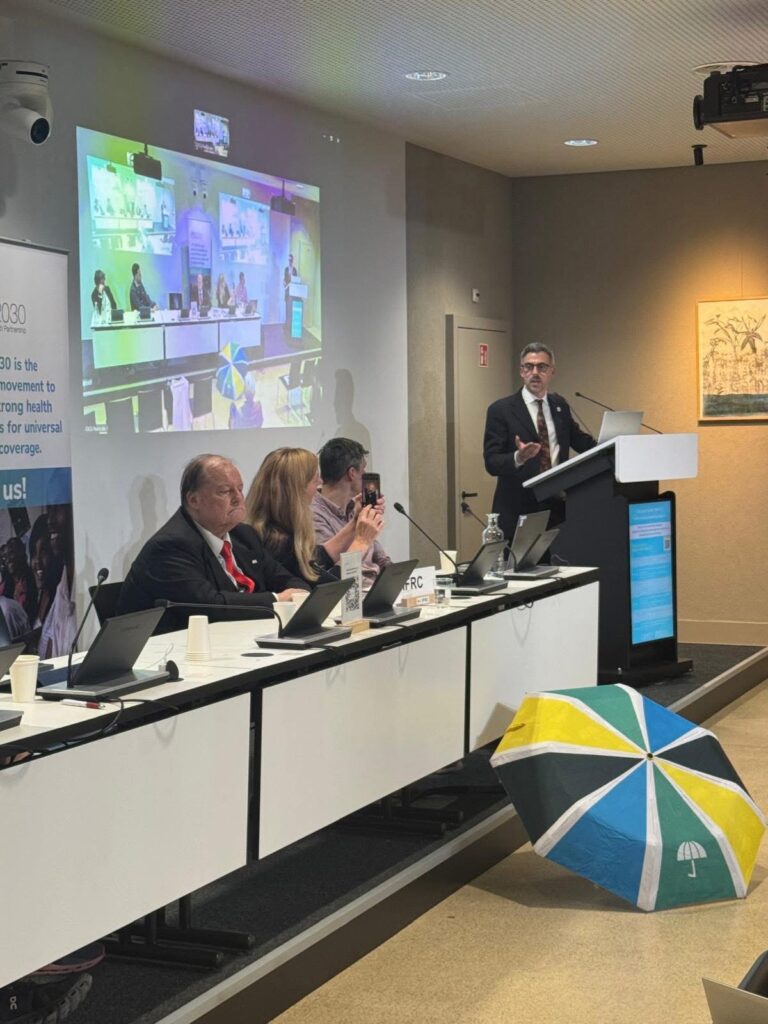
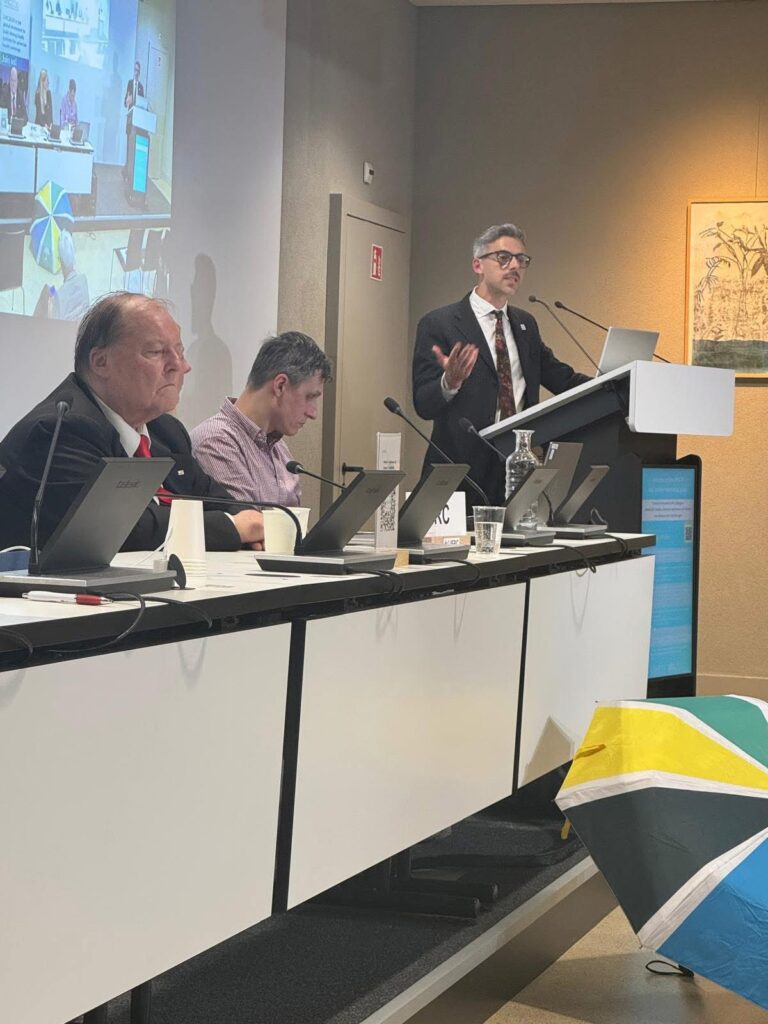
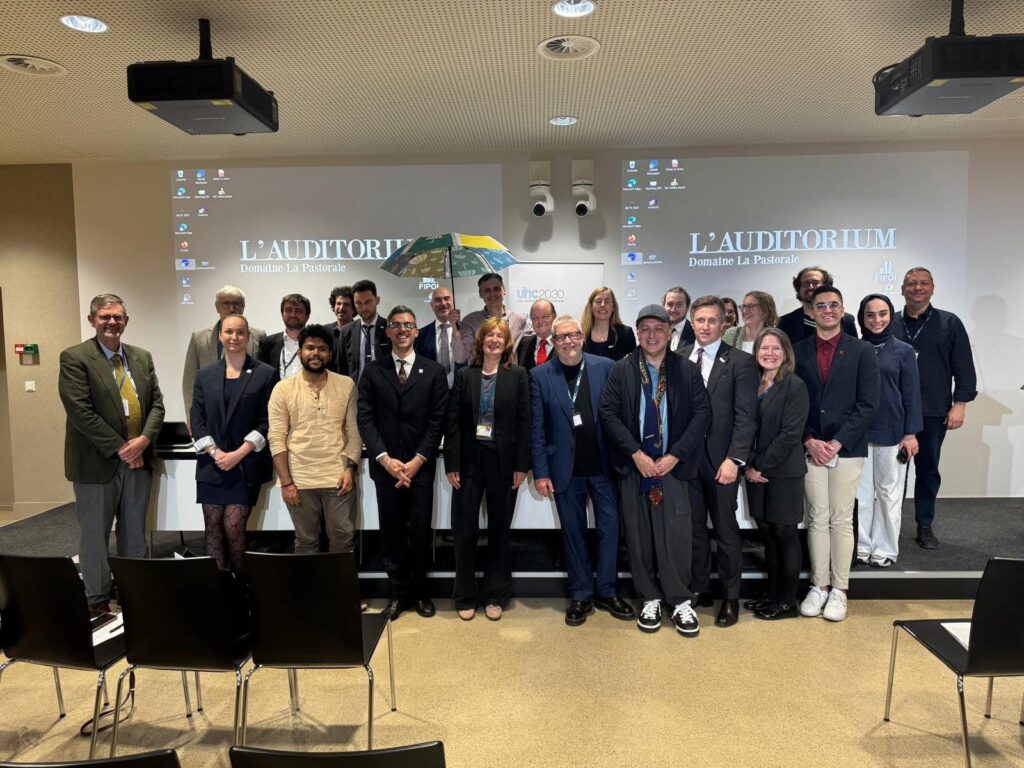
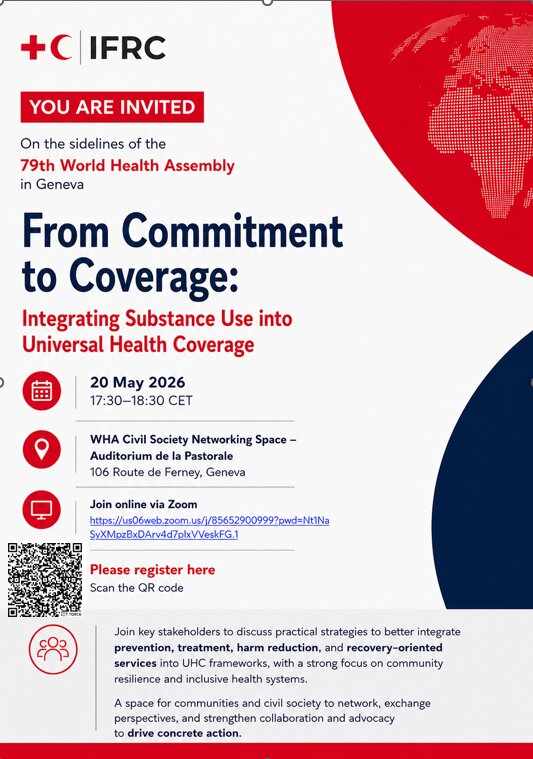
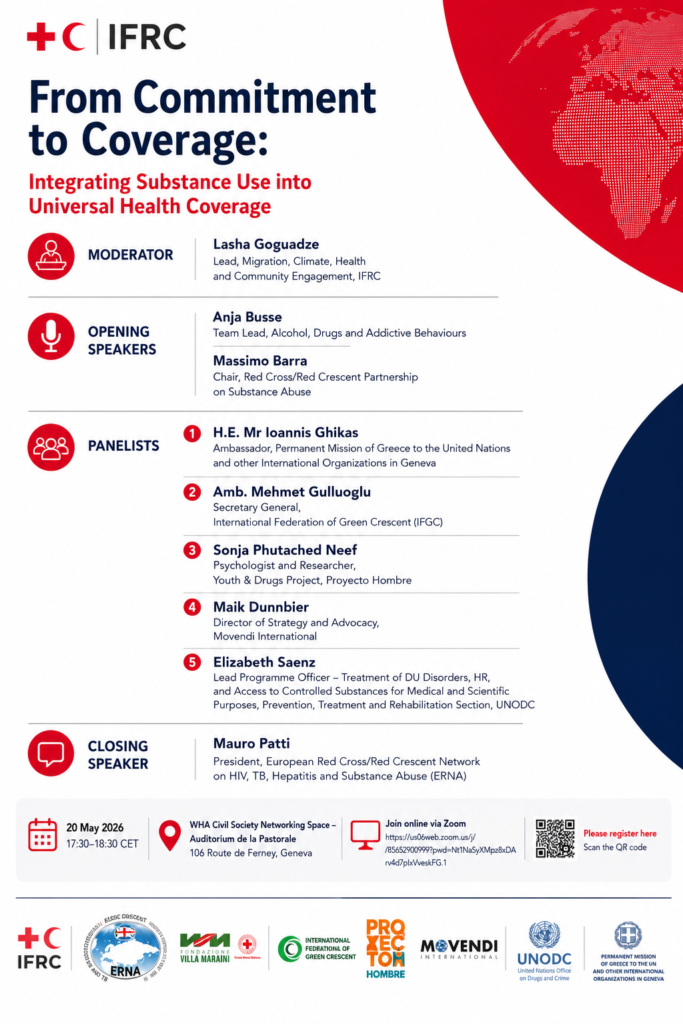
The European Red Cross and Red Crescent Network on HIV, Hepatitis, Tuberculosis, and Substance Abuse (ERNA) proudly participated in a high-level side event hosted by the International Federation of Red Cross and Red Crescent Societies (IFRC) during the 79th World Health Assembly in Geneva.
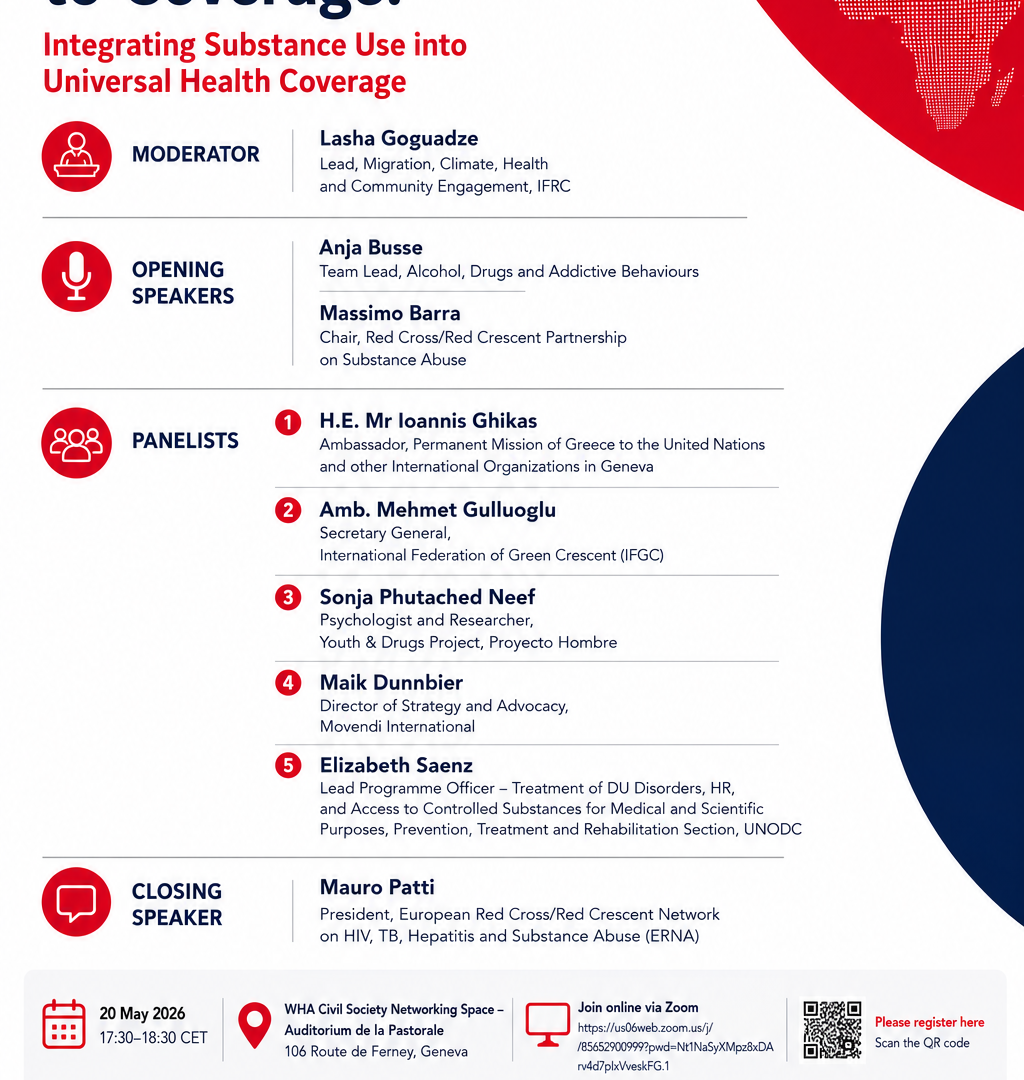
The event, entitled “From Commitment to Coverage: Integrating Substance Use into Universal Health Coverage (UHC),” brought together governments, international organizations, civil society representatives, and public health experts to discuss practical and scalable solutions for ensuring that substance use services are fully integrated into health systems and Universal Health Coverage frameworks.
Representing ERNA, President Mauro Patti joined an esteemed panel including representatives from the World Health Organization (WHO), the United Nations Office on Drugs and Crime (UNODC), the Hellenic Government, the International Federation of Green Crescent (IFGC), the Red Cross and Red Crescent Partnership on Substance Abuse, Proyecto Hombre, and Movendi International.
Throughout the discussion, a clear message emerged: despite global commitments to Universal Health Coverage, people affected by substance use disorders continue to face significant barriers to accessing healthcare.
Participants highlighted several key priorities:
- The need to include substance use services within national UHC benefit packages and financing mechanisms.
- The importance of shifting from punitive approaches toward public health-centered responses that reduce stigma and improve access to care.
- Recognition of harm reduction services as essential, evidence-based healthcare interventions.
- The urgent need to overcome fragmentation between health, social, and community services through integrated and multidisciplinary approaches.
- Greater investment in civil society organizations, peer-led initiatives, and community-based services that often provide critical support where formal systems fall short.
Speaking on behalf of ERNA, Mauro Patti emphasized that Universal Health Coverage cannot be considered truly universal while people affected by addiction, that very often have double stigma according to their co-mobidity with STIs like HIV and Hepatitis, remain excluded from healthcare systems, social protection, and decision-making processes.
He also highlighted the role of Red Cross and Red Crescent National Societies in strengthening community health systems through multidisciplinary collaboration, volunteer engagement, linkage to care, and continuity of support for vulnerable populations.
The discussion reinforced a shared understanding that integrating substance use services into UHC is not simply about adding another health intervention. It requires a broader commitment to inclusion, dignity, human rights, and equitable access to healthcare.
As ERNA continues to implement its Strategic Priorities and Plan of Action, the Network remains committed to advocating for evidence-based, community-centered, and human rights-focused approaches that ensure no one is left behind.
Universal Health Coverage will only be truly universal when people affected by addiction and people affected by HIV, Hepatitis, and TB are no longer treated as invisible.